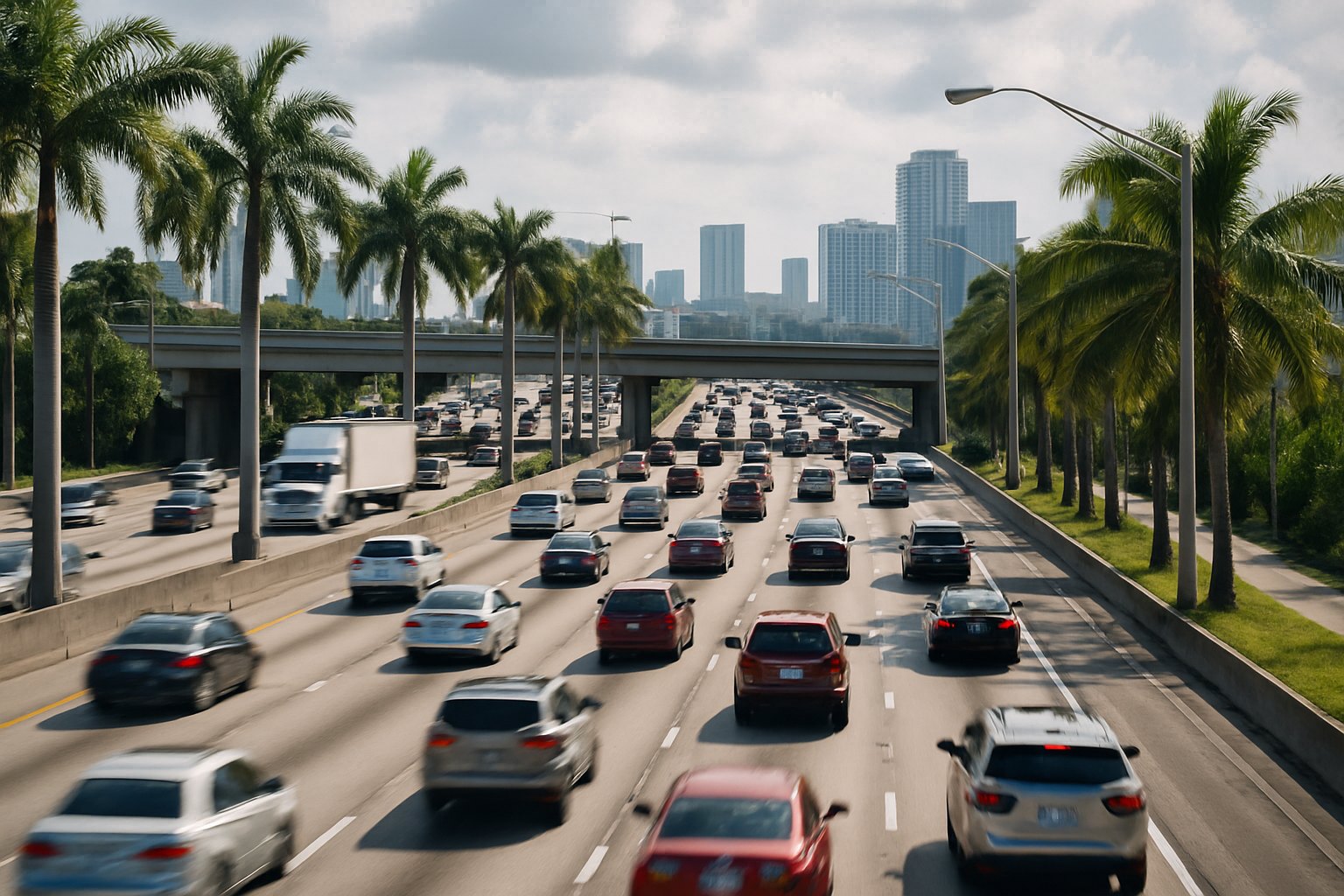
If you drive through Kendall or South Miami-Dade, you already know the pattern. US-1, also called South Dixie Highway, carries a nonstop mix of local traffic, commuters cutting between the Palmetto and the Turnpike, and drivers heading toward the Florida Keys, and it does all of that as a busy surface road with signals, turn lanes, and shopping centers rather than a limited access highway. Add in Kendall Drive, the Don Shula and Palmetto Expressways, and the traffic around Dadeland, and it is easy to see why crashes are common here. This guide covers what to do after a crash on US-1 or the surrounding Kendall corridor, and when it makes sense to call a lawyer.
This is general information, not legal advice for your specific case. A free consultation can sort out how these rules apply to what actually happened to you.
Why this corridor sees so many crashes
A few things about the roads through Kendall and South Miami-Dade make them a recurring source of serious collisions:
- US-1 mixes highway speeds with surface street stops. South Dixie Highway carries heavy through traffic, but it is dotted with signals, left turn lanes, and driveways into shopping plazas, so drivers going highway speed are constantly meeting cars braking or turning in front of them.
- Kendall Drive (SW 88th Street) is one of the busiest east-west routes in the county. It connects neighborhoods to US-1, the Palmetto, and the Turnpike, and it carries dense commuter traffic every rush hour, plus school and shopping traffic during the day.
- The Palmetto Expressway (SR 826) and Don Shula Expressway (SR 874) interchanges funnel a huge volume of merging traffic. Drivers moving between these expressways and US-1 or Kendall Drive are often changing lanes quickly to make an exit, which is a common setup for sideswipe and rear end crashes.
- Dadeland is a major traffic generator. The area around Dadeland Mall and the Dadeland North and South Metrorail stations draws shoppers, commuters parking to catch the train, and pedestrians crossing US-1 and nearby side streets, all converging in a relatively small area.
- Rush hour backups lead to rear end crashes. Traffic on US-1 and Kendall Drive slows and stops repeatedly during peak hours, and distracted drivers who do not react in time are a frequent cause of rear end collisions in stop and go conditions.
What to do right after a crash on US-1 or in Kendall
The steps are the same wherever in the corridor the crash happens, whether it is a fender bender near Dadeland or a more serious collision at a Kendall Drive intersection:
- Check for injuries and call 911. Get a police report started. Miami-Dade Police or the relevant local department will respond, and the report becomes an important record of the crash, especially on a busy road like US-1 where fault can be disputed.
- Move to safety if you can. US-1 and Kendall Drive carry fast, heavy traffic, and staying in a travel lane after a crash creates a serious risk of a second collision. If your vehicle is drivable and it is safe to do so, move to the shoulder or a nearby parking lot.
- Take photos and video. Capture the vehicles, the damage, the intersection or block, any traffic signals or turn lanes involved, and skid marks if there are any. On a corridor with this much signalized cross traffic, the exact location and signal phase can matter.
- Get the other driver's information and any witness names and numbers. Shopping centers and businesses line much of US-1 through Kendall, so there may be witnesses nearby, and some locations may have surveillance cameras worth asking about.
- See a doctor promptly, even if you feel okay. Injuries like whiplash, concussions, and soft tissue damage often do not show symptoms right away, and a prompt medical record connects your injuries to the crash.
Florida's no-fault rules and your medical bills
Florida requires most drivers to carry personal injury protection, often called PIP, which pays a portion of your own medical bills and lost wages after a crash regardless of who was at fault, up to your policy limits. There is a catch that surprises many people: to use your PIP benefits, you generally must seek medical treatment within fourteen days of the crash. If your injuries are serious, PIP alone may not come close to covering everything, and the insurance company may still dispute how much of the bill they owe or how significant your injuries really are. That is often where clients feel the most pressure, especially if they cannot work while they recover.
Getting treated after a crash in South Miami-Dade
Baptist Hospital of Miami, near Kendall, is the dominant hospital for this part of the county and is a common destination for people injured in crashes along US-1, Kendall Drive, and the surrounding expressways. Getting seen quickly matters both for your health and for building a clear medical record tied to the crash date.
When it makes sense to call a lawyer
Not every fender bender needs a lawyer, but there are situations on this corridor where getting help early makes a real difference:
- You were seriously hurt, needed surgery, MRIs, or ongoing therapy, or you cannot work while you recover.
- The insurance company is disputing fault, offering a settlement that does not come close to covering your medical bills, or is slow to respond.
- Multiple vehicles were involved, which is common in rear end chains during rush hour backups on US-1 or Kendall Drive, and figuring out who is responsible for what share gets complicated fast.
- You are not sure whether your damages, medical bills, lost wages, and ongoing care, are being properly accounted for.
A lawyer can deal with the insurance company on your behalf, help arrange your medical care, and make sure you are not the one chasing down updates while you are trying to recover. If your crash happened anywhere in the area, a personal injury lawyer in Kendall or a Miami car accident lawyer can walk through your specific situation with you.
How long you have to file a claim
As of Florida's 2023 tort reform, most negligence based personal injury claims must be filed within two years of the injury. This is general information, and the deadline for your specific case can differ, so confirm your exact timeline with an attorney rather than assuming. Keep in mind the separate fourteen day window to seek treatment if you want to use your PIP benefits, since that clock runs much faster than the filing deadline.
How Reyes Injury Law can help
At Reyes Injury Law, our Miami team handles car accident cases along US-1, Kendall Drive, and throughout South Miami-Dade on a contingency basis, which means no fee unless we win your case. Even in a contingency case, clients may still be responsible for certain costs and expenses regardless of the outcome, and we explain all of that up front. We are bilingual, se habla espanol, and a real person answers when you call, so you are never left wondering what is happening with your case. To talk through your crash and your options, reach out through our contact page for a free consultation. There is no obligation and no cost to have the conversation.
Frequently asked questions
Why are there so many crashes on US-1 through Kendall?
What should I do right after a crash on Kendall Drive or US-1?
Who pays my medical bills after a Kendall car accident?
Where should I go for treatment after a crash in South Miami-Dade?
Do I need a lawyer for a fender bender on US-1?
How long do I have to file a claim after a crash in Kendall?
What to do next
If any of this describes what happened to you, the next step is simple: get advice before you talk to the insurance company.
Why the timing matters
Evidence disappears, surveillance video is overwritten, and Florida sets a deadline for filing an injury claim. Getting advice early costs nothing and protects your options.
A note on fees
The consultation is free and there is no fee unless we win. You may still be responsible for case costs and expenses regardless of the outcome.
More Miami injury guides
- What to Do After a Car Accident in Miami
- Do I Need a Lawyer After a Car Accident in Miami?
- How Long Do I Have to File an Injury Claim in Florida?
- What Is My Injury Case Worth in Florida?
- What to Do After a Slip and Fall in Miami
- Injured in an Uber or Lyft in Miami? Here Is What to Do
- How to Pay Medical Bills After a Miami Accident
- What No Fee Unless We Win Really Means
- Car Accidents on the Palmetto Expressway: What to Do
- Injured in Hialeah? A Local Injury Guide
- Pedestrian and Rideshare Accidents in Miami Beach
- Crashes Near the 826 and 836 Interchange in Doral
- Injured in Homestead? US-1 and the Turnpike