Miami Motorcycle Accident Lawyers
Riders face unfair blame and severe injuries. We push back on the anti-rider bias and build the case for the compensation you deserve.
Call (305) 555-0147Free ConsultationMiami Motorcycle Accident Lawyer
Riders face unfair blame and severe injuries. We push back on the anti-rider bias and build the case for the compensation you deserve. We represent injured people across Miami and Miami-Dade County, and a real person answers when you call, 24 hours a day.
How we help
- We take on the insurance company. You do not deal with the insurance company; we do.
- We help arrange your medical care. We help you get to the right doctors and get your injuries documented.
- We investigate fast. We move quickly to preserve the evidence before it disappears and build your case.
- We keep you updated. We call you with real status so you never have to chase your own case.
- No fee unless we win. The consultation is free; you may still be responsible for costs and expenses regardless of the outcome.
What sets us apart
The most common thing we hear is that the last firm went quiet, or that the insurance company was pushing for a quick statement or a lowball offer. We do it differently: a real person answers, we call you with updates, and we take the pressure off you.
We also take the hard cases, the complicated ones other firms turn away. If you are not sure whether you have a case, call and we will tell you honestly, free of charge.
Why a Miami motorcycle case is not a car case
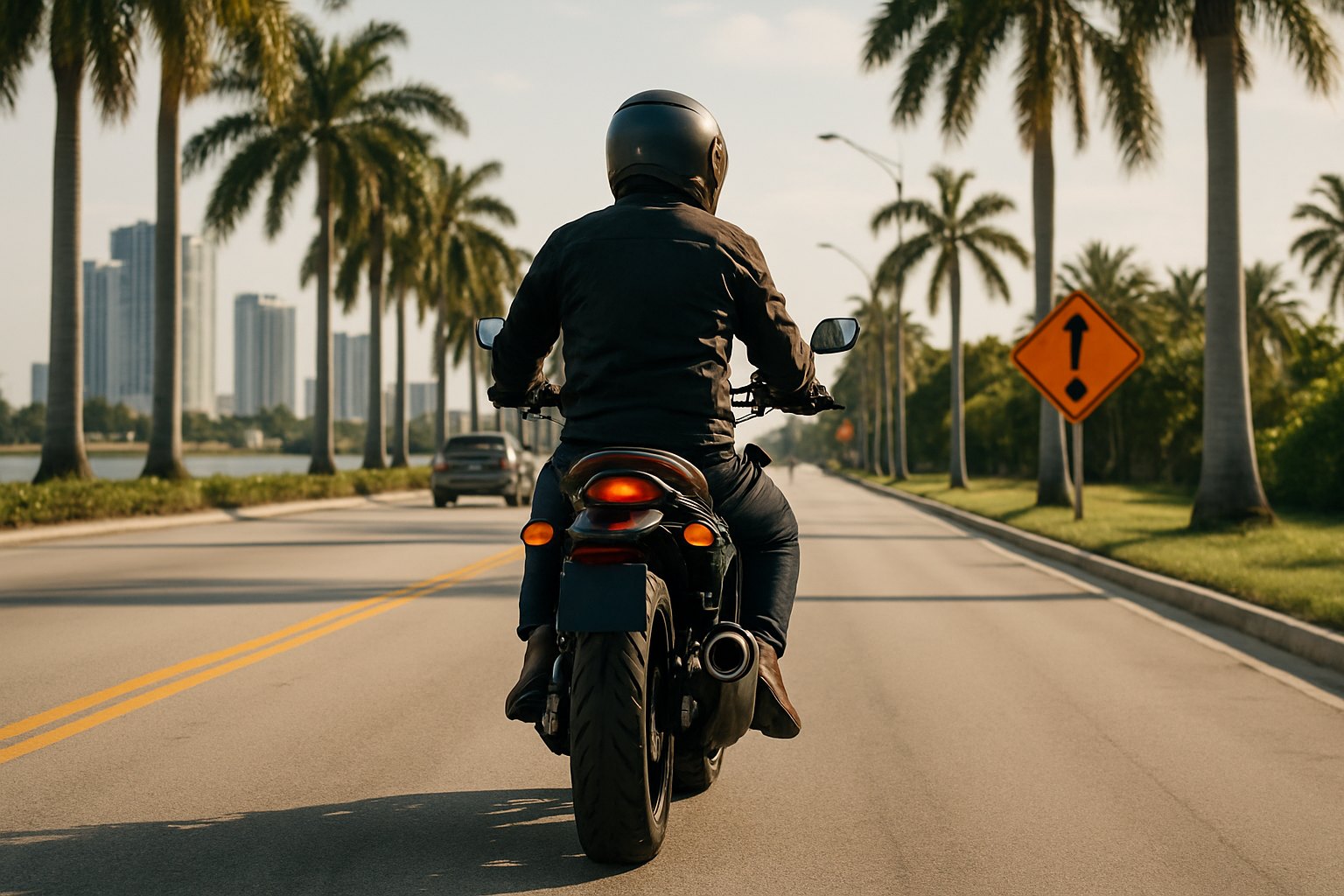
Riders expect the process to work the way it does for a car. It does not. Florida's no-fault system was built around vehicles with four wheels, and a motorcycle generally sits outside it. That one fact reshapes how your medical bills get paid, which policies matter, and how strong your claim against the driver who hit you actually is.
Florida PIP does not apply to motorcycles
Personal Injury Protection, the PIP coverage every car owner in Florida carries, is generally not available to a rider injured on a motorcycle. There is no automatic pot of no-fault money waiting to pay the first portion of your emergency room visit. That changes the first week completely:
- Health insurance, if you have it, usually becomes the primary payer, and it will typically assert a right to be reimbursed out of any settlement.
- MedPay on a motorcycle policy, if you bought it, is often the only immediate benefit available, and the limits are usually modest.
- Uninsured motorist and underinsured motorist coverage move from optional afterthought to the center of the case.
Riders are often shocked to learn their policy paid for the bike and nothing for their body. We would rather find that out on day one than after treatment has begun.
The upside: the serious injury threshold does not gate you the same way
There is a real advantage buried in the same rule. Because a motorcyclist is generally outside the no-fault system, the serious injury threshold that limits when a car occupant can sue the at-fault driver does not restrict a motorcycle crash claim in the same way. A rider can generally pursue the negligent driver without first proving permanency the way a car claim requires.
That does not make the case easy. The fight moves earlier and lands on liability and on comparative negligence. Under Florida's modified comparative negligence rule, a person found more than 50 percent responsible for their own injuries is generally barred from recovering, and below that, recovery is reduced by the percentage of fault assigned.
The helmet question, answered plainly
Florida law allows certain riders meeting statutory requirements, including age and carrying required medical insurance coverage, to ride without a helmet. Riding legally without one is not negligence, and it did not cause a driver to turn left across your path. Expect the defense to raise it anyway.
The argument is almost never about fault for the crash. It is about damages, and it sounds like this: the head injury would have been less severe with a helmet, so the driver should pay less. That is a medical question, answerable with medical evidence. If you were wearing a helmet, the helmet itself is often the best proof of the forces involved, which is one reason not to throw it away.
Rider bias is the defense's first tool
Before anyone looks at a photograph, many drivers, jurors, and insurance company files start from an assumption: the rider was speeding, weaving, splitting lanes, showing off. Nobody says it out loud, and it shapes everything. Countering it is not a matter of arguing harder. It takes objective proof: scene measurements, signal timing, camera footage, damage geometry, and the physical evidence on the bike and the gear. Lane splitting is not legal in Florida, so if the defense claims you were doing it, that accusation has to be met with evidence and not left to hang.
How long you have to file in Florida
As general information, Florida's statute of limitations for most negligence claims, including typical motorcycle accident claims, is two years from the date of the incident for causes of action accruing after the March 2023 change in the law. Other deadlines can apply, and claims involving a government entity, such as a dangerous roadway condition, carry their own notice requirements and shorter presuit steps. Deadlines are unforgiving and fact-specific, so treat this as background information and not as legal advice about your situation.
How riders actually get hit in Miami-Dade
Motorcycle crashes are not random. A handful of patterns account for most of the serious ones we see, and each points to different evidence. Knowing which one you are in tells us where to send an investigator on day one.
The left turn across your path
This is the most common serious motorcycle crash pattern there is. A driver waiting to turn left looks straight at an oncoming motorcycle, judges it as farther away and slower than it is, and turns. The rider has nowhere to go. It happens at signalized intersections along Biscayne Boulevard, on SW 8th Street through Little Havana, along Kendall Drive, and at the surface crossings on US-1.
The driver's account is nearly always the same three words: I never saw him. That statement is useful. It is an admission of failing to yield to something that was there to be seen, and it works against the later claim that the rider came out of nowhere. Signal phase data, the position of impact damage, and photographs taken from the driver's actual stopping point turn that sentence into proof.
Doors, lane changes, and the vehicle that never touched you
In dense corridors, riders get hurt by drivers who never register that a motorcycle is beside them. A door opens into the lane in Brickell. A driver drifts across a lane line on the MacArthur Causeway or the Julia Tuttle without a mirror check. Sometimes there is no contact at all: a car crosses into your lane, you brake or swerve, you go down, and the car keeps going.
- No-contact crashes are real claims, commonly pursued as uninsured motorist phantom vehicle claims, and they generally require prompt reporting and independent corroboration.
- Corroboration means witnesses, nearby business cameras, and physical evidence consistent with an evasive maneuver rather than a simple loss of control.
- Camera systems along commercial corridors typically overwrite within days, so canvassing starts immediately, not after treatment ends.
Road surface, debris, and the open-road corridors
A pothole, a sunken utility cut, loose gravel, or a sheet of diesel is an inconvenience in a car and a crash on two wheels. These cases come up on the rougher stretches of Krome Avenue, on Old Cutler Road, and in resurfacing zones anywhere in the county. Where a public entity is responsible for the roadway, notice requirements and shorter presuit steps apply, and proving how long a defect existed usually depends on maintenance records and prior complaints that have to be requested before they age out. Where a contractor left the condition, the responsible party may be a private company with commercial coverage. Identifying who owned the hazard is often the whole case.
The injuries are different, and the timeline is longer
A motorcycle has no crush structure, no restraints, and nothing between the rider and the road. The result is a different injury profile: road rash and degloving injuries requiring staged wound care, orthopedic fractures needing hardware and months of weight-bearing restrictions, and traumatic brain injury that can occur even with a helmet. Serious riders here are frequently transported to Jackson Memorial Hospital and the Ryder Trauma Center. Trauma charting captures the life threats first, so the shoulder, the wrist, or the cognitive symptoms that become the long-term problem are often recorded later, at follow-up. One more reason not to skip that appointment.
Why the insurance company calls so fast
Within a day or two, someone from the other driver's insurance company usually calls and asks to record a statement. In a motorcycle case the questions carry an extra edge, because they are fishing for speed, for lane position, and for anything that sounds like weaving. You are not required to give a recorded statement to the other driver's insurer, and we generally handle that contact for our clients so nothing said on day two gets used against you in month eight.
Evidence that only exists in a motorcycle case
Some of the strongest proof in a rider's case is sitting in a garage or a hospital property bag, and most people throw it out or clean it up in the first week. Physical evidence unique to two wheels does work no witness statement can do.
Your gear is evidence, so do not wash it or repair it
Keep the helmet, jacket, gloves, boots, and pants exactly as they came off you. Do not wash them, do not repair them, and do not discard anything that looks destroyed, because destroyed is the point. Damage patterns corroborate the mechanism of the crash:
- Impact marks and abrasion direction on a helmet indicate where and how the head struck, which speaks to the defense's argument about head injury.
- Abrasion on one side of a jacket and boot tells a story about the direction of the slide and whether the bike went down before or after impact.
- Scuffing, tearing, and embedded roadway material help distinguish an impact from a simple loss of control.
If the hospital cut your gear off, ask for the property bag before discharge. It gets discarded quickly.
Do not repair or sell the motorcycle
The bike is the second half of the physical record. Fork and frame deformation, the direction of footpeg and bar scrapes, tire condition, and the location of impact damage all bear on speed, angle, and who struck whom. Once the bike is repaired, released to salvage, or sold, that proof is gone permanently. Insurers move quickly to total a motorcycle and take possession of it, and a rider facing storage fees often says yes without knowing what is being given up. Before you authorize anything, let your lawyer arrange photographs and, if it matters, an inspection.
Cameras, and the ones people forget
Many riders run a helmet or bike camera and forget it was recording, or assume the file was lost. Preserve the card immediately and do not overwrite it. Beyond your own footage, the corridors where riders get hit are lined with cameras nobody thinks to ask about: gas stations, storefronts, doorbells facing the street, and vehicles with dash cameras that stopped to help. All of them overwrite, most within days. That is why canvassing happens in the first week or it does not happen at all.
What we do while you are recovering
A long orthopedic recovery is not compatible with chasing your own case. We handle the medical follow-up, request the records and billing ourselves, and update you on a schedule rather than waiting for you to call and ask. Clients tell us what they remember is being kept informed and not having to fight two battles at once. That is a promise about our process, not a prediction about your result.
What we tell riders about value
We will not quote you a number on a first call, and we would be skeptical of anyone who does. Case value depends on the injuries and how they resolve, the medical documentation, the coverage that actually exists, liability disputes, and how the loss affects your work and daily life. Those facts develop over months. Prior results do not guarantee a similar outcome in any case.
Mistakes that quietly cost people their claim
Most of the damage to a case happens in the first two weeks, before anyone has hired a lawyer. These are the ones we see most often.
Assuming your motorcycle policy will pay your medical bills
Because Florida PIP does not apply to motorcycles, a policy that fully covers the bike may cover nothing for your body. Riders discover this after treatment has started and the bills arrive. Find out what you have before you need it: check whether you carry MedPay, confirm your health insurance is active, and identify every uninsured motorist policy in the household that could apply. If you are already injured, bring the declarations page to your first meeting.
Cleaning, repairing, or discarding your gear and your bike
The instinct is to clean up and move on. Do not. A scuffed helmet, a torn jacket, and an unrepaired motorcycle carry evidence about direction, force, and mechanism that cannot be recreated once they are washed, fixed, or hauled to salvage. Photograph everything, store it dry, and tell your lawyer before you authorize any repair or release.
Explaining yourself at the scene or on a recorded call
Riders often feel the bias immediately and start defending themselves: I wasn't speeding, I had the light, I always ride careful. Those statements get compressed into a report or a recording and reused out of context. Say what happened factually to law enforcement, get medical attention, and let the insurance company deal with your lawyer rather than with you.
Posting about the crash or your recovery on social media
This hurts more in a motorcycle accident case than almost any other, because riding content already lives on most riders' accounts. An old video of a spirited ride becomes the defense's exhibit on how you ride, regardless of when it was taken. A new photo of you standing at a family gathering becomes proof the fractures healed fine. While a claim is pending, stop posting about the crash, your injuries, your treatment, your activities, and your riding.
Taking the first offer because the bills will not wait
Without PIP to bridge the early months, the money pressure on an injured rider is heavier than on a car occupant, and insurers know it. Signing a release ends the claim permanently, including for the hardware removal, the revision surgery, or the cognitive symptoms that surface later. If you truly need money now, say so openly, because there are usually better ways to address that than closing a case you can never reopen.
What proves your case and who actually pays
Evidence worth preserving right now
- The crash report number and responding agency, plus the driver's name, insurer, and policy number, and whether the driver was working at the time
- Photographs of the motorcycle from every side before it is moved, repaired, or released, including footpeg and bar scrapes, fork and frame damage, and tire condition
- All riding gear kept unwashed and unrepaired: helmet, jacket, gloves, boots, and pants, plus the hospital property bag if the gear was cut off
- Helmet or bike camera footage preserved on the original card, along with the names of drivers who stopped and may have dash camera video
- Scene photographs showing sight lines from the driver's stopping position, signal placement, lane markings, and any surface defect, debris, or fluid on the roadway
- Names and phone numbers of every witness taken before anyone leaves, including passengers and people in nearby businesses
- Declarations pages and full policies for every vehicle and motorcycle in your household, to identify MedPay and any uninsured or underinsured motorist coverage
- Every medical record and bill from the trauma center forward, including imaging, wound care and surgical notes, and any neurological or cognitive evaluation
Who actually pays in a Miami motorcycle accident case
The payment structure a car client expects does not exist here. Because Florida PIP generally does not cover a motorcycle, there is no automatic first layer of no-fault benefits. In practice, early medical bills are usually carried by your health insurance, by MedPay if your motorcycle policy includes it, or by providers willing to treat under a letter of protection while the case is pending. Health insurers and certain government payers commonly assert a right to be reimbursed out of any recovery, so working those balances down directly changes what reaches you at the end.
The recovery itself usually comes from the at-fault driver's bodily injury liability coverage, and Florida does not require drivers to carry that coverage the way many states do. When the driver has none or not enough, your own uninsured motorist or underinsured motorist coverage may become the primary source, and it is also the route for a phantom vehicle claim where nothing ever touched you. Other parties can be responsible as well: an employer if the driver was working, a contractor that created a road hazard, or a public entity responsible for the roadway, which carries its own notice requirements. Mapping every policy and party early is the first real work in a motorcycle crash case, because a claim is only worth what there is coverage to pay. We handle these cases on a contingency fee, meaning no fee unless we win, and clients may still be responsible for costs and expenses regardless of the outcome.
This page is general information about Florida law, not legal advice about your specific situation. Prior results do not guarantee a similar outcome.
What it costs to hire us
You do not pay us anything up front, and there is no charge for the consultation. We work on a contingency fee, which means our attorney fee comes out of the recovery only if we win your case. If we do not recover money for you, you owe no attorney fee.
You may still be responsible for costs and expenses regardless of the outcome of your case. We will explain any costs clearly and in writing before we begin, so there are no surprises. Prior results do not guarantee a similar outcome.
How your case works, step by step
From the first call to resolution, here is exactly what to expect when Reyes Injury Law handles your claim in Miami-Dade County.
1. Free consultation
Call and tell us what happened in Miami. A real person answers 24 hours a day, and there is no obligation.
What to have ready
Any photos from the scene, the crash or incident report or exchange information, and the name of any insurance company that has contacted you.
2. We take over the insurance company
We deal with the insurance company so you do not have to, and we protect your claim from a lowball first offer.
Do not give a recorded statement first
What you say early to an adjuster can be used to reduce your claim, so let us handle the communication.
3. We help you get treated
We help you line up the doctors and medical care you need so your injuries are properly documented.
Why treatment matters
Gaps in treatment are one of the first things the insurance company uses to dispute an injury claim.
4. We build and press your case
We gather the evidence, keep you informed at every step, and pursue the full value of your claim.
How we keep you informed
You hear from us with real updates, so you never have to chase your own case.
A note on fees and costs
You owe no attorney fee unless we win. You may still be responsible for case costs and expenses regardless of the outcome, and these are always explained in your written fee agreement before we begin.
Meet the Reyes Injury Law team
Click any photo to read about the attorney or staff member on your side. Bilingual team, se habla espanol.
What our clients say
Areas we serve
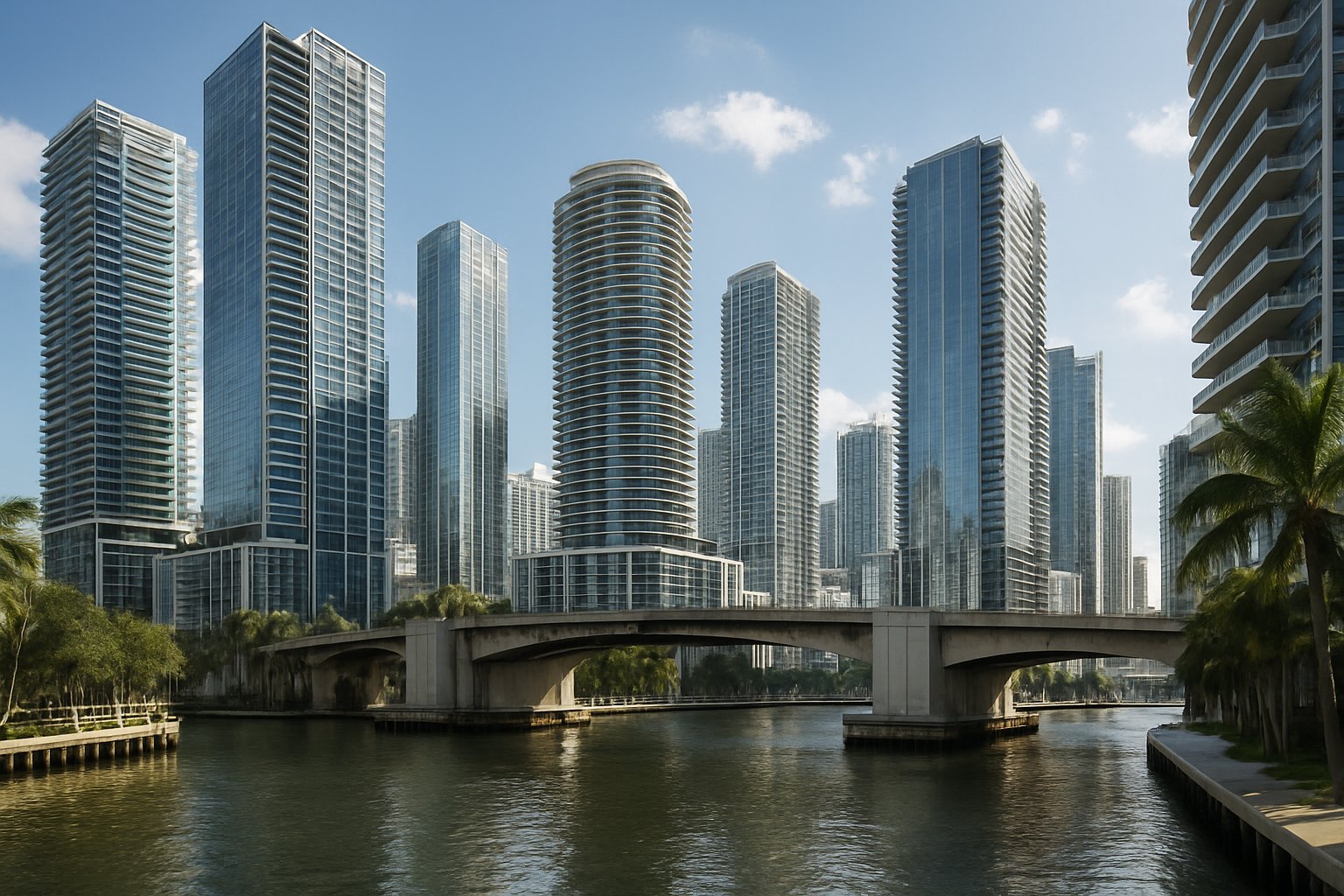
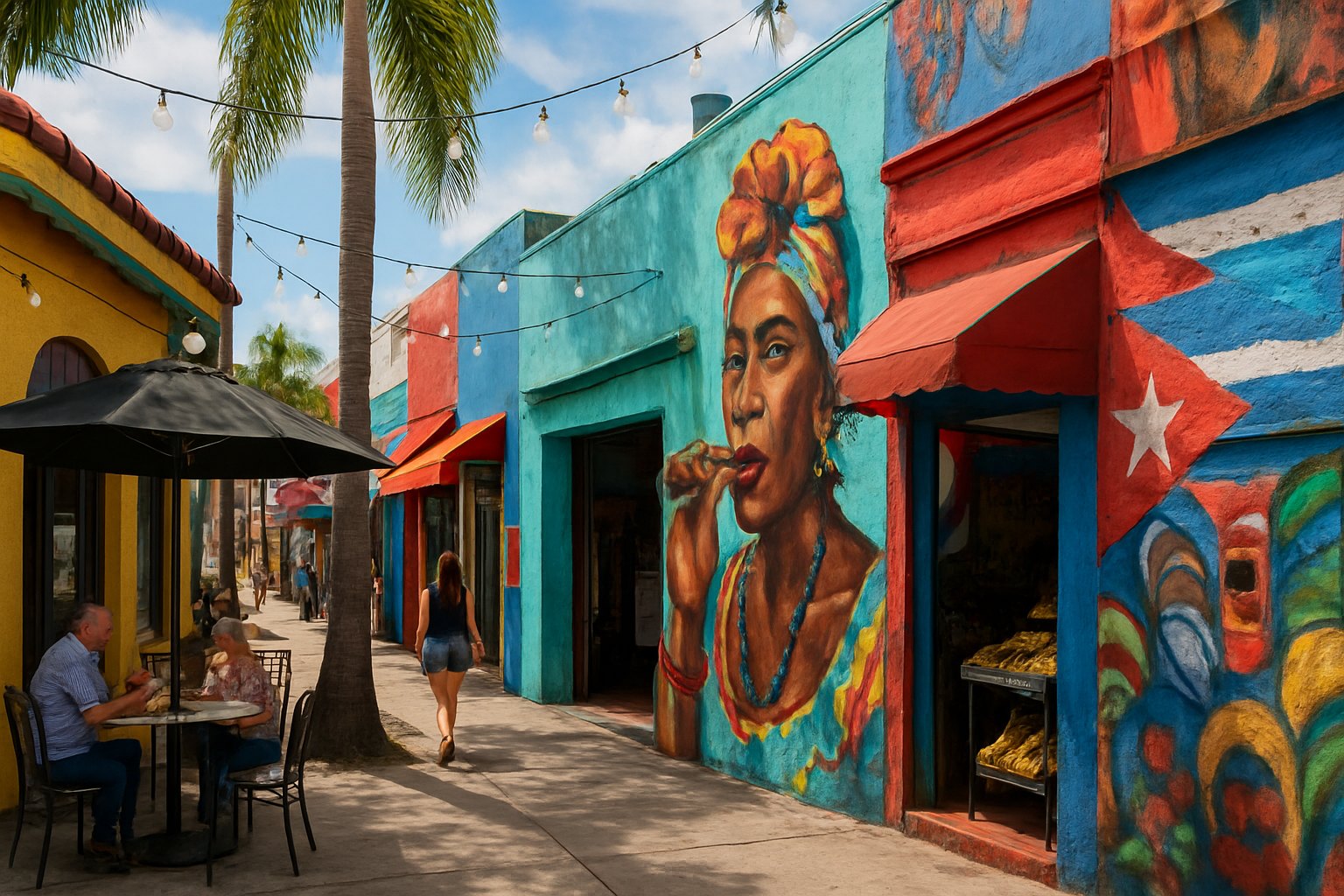
Reyes Injury Law represents injured people across Miami and Miami-Dade County. Find your city:

Frequently asked questions
What should I do right after an accident in Miami?
How will I pay my medical bills while my case is pending?
How long do I have to file a claim in Florida?
What does "no fee unless we win" mean?
Explore our Miami injury practice
- Miami Car Accident Lawyer
- Miami Truck Accident Lawyer
- Miami Slip and Fall Lawyer
- Miami Wrongful Death Lawyer
- Miami Rideshare Accident Lawyer
- Personal Injury Lawyer in Miami
- Personal Injury Lawyer in Hialeah
- Personal Injury Lawyer in Miami Gardens
- Personal Injury Lawyer in Miami Beach
- Personal Injury Lawyer in Homestead
Hurt in a motorcycle accident? Talk to us.
The consultation is free and there is no fee unless we win. A real person answers, 24 hours a day.
Call (305) 555-0147