Miami Slip and Fall Lawyers
Property owners must keep their premises reasonably safe. When they don't and you get hurt, we prove the hazard and pursue your claim.
Call (305) 555-0147Free ConsultationMiami Slip and Fall Lawyer
Property owners must keep their premises reasonably safe. When they don't and you get hurt, we prove the hazard and pursue your claim. We represent injured people across Miami and Miami-Dade County, and a real person answers when you call, 24 hours a day.
How we help
- We take on the insurance company. You do not deal with the insurance company; we do.
- We help arrange your medical care. We help you get to the right doctors and get your injuries documented.
- We investigate fast. We move quickly to preserve the evidence before it disappears and build your case.
- We keep you updated. We call you with real status so you never have to chase your own case.
- No fee unless we win. The consultation is free; you may still be responsible for costs and expenses regardless of the outcome.
What sets us apart
The most common thing we hear is that the last firm went quiet, or that the insurance company was pushing for a quick statement or a lowball offer. We do it differently: a real person answers, we call you with updates, and we take the pressure off you.
We also take the hard cases, the complicated ones other firms turn away. If you are not sure whether you have a case, call and we will tell you honestly, free of charge.
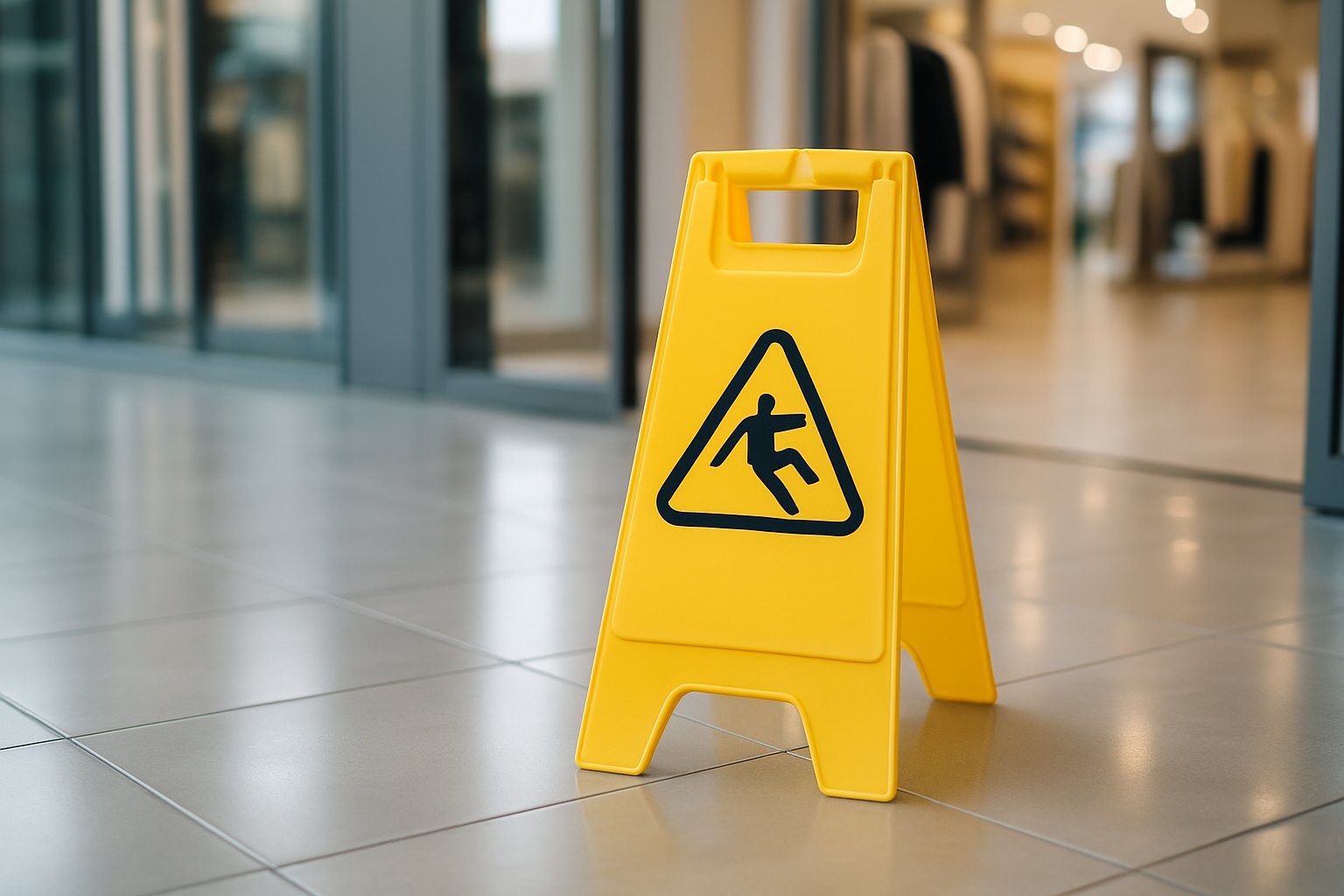
Why a Miami slip and fall case is really a case about notice
People call us and say the same words: I had a slip and fall at the store, there was water on the floor, and nobody put out a sign. It sounds like the case proves itself. It does not. Under Florida Statute 768.0755, when someone slips on a transitory foreign substance in a business establishment, the injured person must prove the business had actual or constructive knowledge of the dangerous condition and should have taken action. That sentence decides most premises liability cases in this state, and it is a demanding standard.
Actual notice versus constructive notice
Actual notice means someone at the business knew: a customer reported the spill, a manager walked past it, or an employee caused it. That proof is powerful and uncommon. Constructive notice is the path most cases take, and the statute allows two routes:
- The condition existed for such a length of time that the business, using ordinary care, should have known about it.
- The condition occurred with regularity and was therefore foreseeable, meaning this is a spot that goes slick over and over and the business knows it.
The second route matters in Miami. A tile entrance that floods every afternoon during storm season is no surprise to the people who work there. Neither is the produce misting station or the garage ramp that funnels rainwater onto polished stone.
How time on the floor gets proven
Because constructive notice comes down to how long the substance sat there, the evidence is specific and perishable:
- Surveillance video with timestamps showing when the substance appeared and when you fell.
- Sweep logs and inspection logs, which show either diligence or a long unswept gap.
- Employee testimony about who was assigned to that zone and when they last walked it.
- The physical character of the substance: dried edges, cart tracks through it, footprints, or dirt tracked into a clear liquid all suggest it sat a long while.
That last category is why a phone photograph taken on the floor, before anyone cleans it up, can carry the whole case.
Surveillance video and why the clock is brutal
Surveillance video is the central evidence in most premises cases, and most systems overwrite on a short retention cycle, sometimes days rather than months. Nobody preserves footage for you out of courtesy. The answer is a preservation letter, sometimes called a spoliation letter, sent to the property owner and its insurance company as fast as possible, identifying the date, time and camera views to be held. It should ask for more than the clip of the fall. The hour before is often what proves how long the hazard sat there.
The incident report the store writes
Most businesses create an internal incident report after a fall. Ask for a copy before you leave and write down the manager's name. What you say in it gets read back to you later. Describe what happened factually and name every part of your body that hurts, even mildly. Saying you are fine out of embarrassment becomes an argument that you were not really hurt. If you are unsure of a distance or a time, say so rather than guessing.
Not every fall is a transitory substance case
Section 768.0755 covers transitory foreign substances: water, grease, spilled product on a floor. Falls caused by structural conditions, a broken step, a missing handrail, a raised sidewalk slab or an unlit stairwell, are analyzed under ordinary negligence and premises principles instead. The distinction changes what must be proven, which is why the exact description of what you fell on matters from the start.
How long you have to file in Florida
As general information, Florida's statute of limitations for most negligence claims, including typical premises liability claims, is two years from the date of the incident for causes of action accruing after the March 2023 change in the law. Claims against a government entity carry their own presuit notice requirements and shorter internal deadlines. Deadlines are unforgiving and fact-specific, so treat this as background information and not as legal advice about your own situation.
Where these falls happen in Miami-Dade
The property type changes the evidence, the defendant, and sometimes the deadline. A fall in a national retail chain and a fall in a condominium lobby two blocks away are investigated in almost completely different ways.
Retail floors, supermarkets and the malls
Large retailers at Aventura Mall and Dadeland Mall usually run extensive camera coverage and formal inspection procedures, which cuts both ways: the footage may exist, and the sweep log may show the aisle had not been walked in an hour. Supermarket chains generate recurring hazards of their own, including freezer condensation, broken jars, and buffed floor near an entrance on a rainy day. During an afternoon storm or through hurricane season, water gets tracked across polished tile for hours. That is a condition occurring with regularity, and it is what mats, cones and a posted sweep schedule are supposed to address.
Condo lobbies, pool decks and common areas
In Brickell and Miami Beach, many injuries happen in buildings rather than stores: slick marble lobbies, wet pool decks, garage stairwells with burned-out lighting, and a leak that keeps coming back. The responsible party may be the condominium or homeowners association, a management company, a maintenance contractor, or a unit owner, and often more than one. Board minutes, maintenance requests and vendor invoices can show the problem was reported repeatedly before you fell.
Hotels, restaurants, sidewalks and garages
Along Collins Avenue and Calle Ocho, falls happen on kitchen-adjacent restaurant tile, unlit exterior steps, and walkways between a valet stand and a lobby door. Outside, the hazards are structural more than transitory:
- Uneven or broken sidewalk slabs, potholes and wheel stops in parking lots.
- Falling merchandise from overhead shelving in warehouse-style stores.
- Missing or loose handrails and unmarked single-step level changes.
- Inadequate lighting in stairwells and garages, including negligent security claims where an injury in a parking garage results from a foreseeable criminal act the property owner failed to guard against.
Who the defendant is changes the rules
A private business, a residential landlord, a condominium or HOA association and a government entity are not interchangeable defendants. Landlord cases often turn on the lease and who controlled the area. Association cases turn on governing documents and maintenance responsibility. Claims involving city, county or state property, including public sidewalks and transit facilities, involve sovereign immunity rules, written presuit notice requirements and shorter practical deadlines. If your fall happened on public property, that is a reason to get advice quickly rather than to wait.
Falls at work are a different track
If you fell while working, workers compensation may be the primary route, and it does not require proving fault. When the property is controlled by someone other than your employer, a separate premises claim against that third party can exist alongside the compensation claim. The two systems interact, including on reimbursement, so they should be evaluated together.
The defenses you should expect
Premises defendants tend to argue the same handful of things in the same order. Knowing what is coming is the difference between being blindsided and being ready.
Open and obvious, and comparative negligence
The first defense is usually that the hazard was open and obvious, meaning a reasonable person paying attention would have avoided it. Florida also applies modified comparative negligence: recovery is reduced by your share of fault, and a person found more than 50 percent responsible for their own injuries is generally barred from recovering at all. Expect the defense to build a percentage out of details that sound trivial:
- Your footwear, especially sandals, flip flops or worn soles.
- Whether you were looking at your phone or talking to someone.
- Whether a cone or mat sat somewhere in the area, even if not near the spill.
- Whether you had walked that same path minutes earlier without incident.
Open and obvious is an argument, not an automatic bar. A property owner can still be responsible where the hazard should have been fixed regardless of visibility, or where merchandising displays drew your attention elsewhere by design.
Visitor status: invitee, licensee, trespasser
The duty owed depends on why you were there. A business invitee, meaning a customer or anyone present for the owner's business purpose, is owed the highest duty: reasonable care to keep the premises reasonably safe, plus warning of dangers the owner knew about or should have discovered through reasonable inspection. A licensee, generally a social guest, is owed a narrower duty focused on known dangers. A trespasser is owed the least. Most of our clients are invitees, but the category is sometimes contested, for instance when someone was in a staff-only area or on the property after hours.
Blaming something other than the fall
Expect prior back or knee treatment, or a degenerative finding on imaging, to be presented as the real cause of your pain. The honest answer is usually that a preexisting condition made you more vulnerable, not that the fall was harmless, and that is a recognized legal concept rather than a weakness to hide. The same applies to a gap in treatment. If cost, transportation or work is keeping you from appointments, we would rather help solve that in advance than explain the gap later.
What we tell clients about value and fees
We will not quote you a number on a first call, and we would be skeptical of anyone who does. Value depends on how strong the notice evidence is, the injuries and how they resolve, available coverage, and how much fault gets argued onto you. Prior results do not guarantee a similar outcome in any case. We handle these cases on a contingency fee, so there is no attorney fee unless we recover for you, and clients may still be responsible for costs and expenses regardless of outcome. Premises cases carry real costs, including record retrieval and site inspections, so ask how costs are handled at the first meeting.
Mistakes that quietly cost people their claim
Most of the damage to a case happens in the first two weeks, before anyone has hired a lawyer. These are the ones we see most often.
Leaving without reporting the fall to the store
Embarrassment is the enemy here. People get up, apologize, and walk out. Weeks later, when the pain has not gone away, there is no incident report, no employee who remembers it, and no reason anyone preserved the video. Report it before you leave, ask for the manager's name, ask that an incident report be written, and ask for a copy. If they refuse, note the time, the exact location in the building, and who you spoke to.
Not photographing the hazard before it is cleaned up
The spill gets mopped within minutes and the broken tile may be patched within days. Photograph the substance close up and in wide shots showing where it sits relative to aisles, doors and displays. Capture the details that show time: dried edges, cart tracks, footprints, dirt in the liquid. Photograph the ceiling for camera positions, and photograph your shoes, which answers the footwear defense before it is made.
Waiting too long to get the video preserved
Surveillance video is the most valuable evidence in these cases and it is routinely lost because nobody asked in time. A written preservation letter needs to go out quickly, identifying the date, time, location and camera views, and asking for footage before and after the fall rather than the clip alone. This is the most time-sensitive step in a premises case.
Giving a recorded statement to the insurance company
Within days, someone from the property's insurance company usually calls, sounding helpful and administrative, and asks to record a statement. The questions aim at fault: what were you looking at, did you see the water, why did you not walk around it, what shoes were you wearing. Answers given before you have seen the video or know the extent of your injuries get used to build a comparative negligence percentage against you. You are not required to give the property's insurer a recorded statement.
Posting about the fall on social media
Photographs, check-ins and comments get pulled into premises cases routinely, and context never survives the trip. One photo of you standing at a family party, or a lighthearted post joking about the fall, gets presented as proof that you were not badly hurt or that you blamed yourself. While my case is pending, the safest approach is to stop posting about the fall, your injuries, your treatment and your activities entirely.
What proves your case and who actually pays
Evidence worth preserving right now
- Photographs and video of the substance or defect before it is cleaned or repaired, close up and wide, plus a photo of the shoes you were wearing
- The name of the manager on duty and the employee who responded, and a copy of the store's incident report with its report number
- The exact location inside the property: aisle number, floor, entrance, stairwell or garage level, so the right camera views can be identified
- Names and phone numbers of every witness, including customers and any employee who mentioned the spill or a prior complaint
- A written preservation request sent quickly for surveillance video covering the hour before and after the fall, not just the moment itself
- Sweep logs, inspection logs, maintenance work orders and, for condominium or HOA property, board minutes and vendor invoices showing prior complaints
- Every medical record and bill from the emergency department or urgent care forward, including imaging and specialist referrals
- Documentation of missed work and photographs of visible injuries taken over several weeks, since bruising and swelling change fast
Who actually pays in a Miami slip and fall case
Unlike a car crash, there is no PIP layer in a premises case, so payment usually starts with the property's liability coverage. That may be a commercial general liability policy held by the business, a landlord's policy, a condominium or homeowners association master policy, or a homeowner's policy in a residential fall. Sorting out responsibility often means untangling more than one party, because the tenant that operates the store, the company that owns the building, the property manager and the cleaning contractor can each carry separate coverage and each point at the others.
Your own health insurance may pay bills in the meantime and then assert a right to be reimbursed out of any settlement, and providers treating under a letter of protection wait to be paid from the recovery. Working those balances down is real work that changes what actually reaches you. Where the fall happened on government property, a public sidewalk or a public building, the analysis changes again, because sovereign immunity rules, presuit notice requirements and statutory limits apply. Mapping every party and every policy early is a large part of the job, because a case is only worth what there is coverage to pay.
This page is general information about Florida law, not legal advice about your specific situation. Prior results do not guarantee a similar outcome.
What it costs to hire us
You do not pay us anything up front, and there is no charge for the consultation. We work on a contingency fee, which means our attorney fee comes out of the recovery only if we win your case. If we do not recover money for you, you owe no attorney fee.
You may still be responsible for costs and expenses regardless of the outcome of your case. We will explain any costs clearly and in writing before we begin, so there are no surprises. Prior results do not guarantee a similar outcome.
How your case works, step by step
From the first call to resolution, here is exactly what to expect when Reyes Injury Law handles your claim in Miami-Dade County.
1. Free consultation
Call and tell us what happened in Miami. A real person answers 24 hours a day, and there is no obligation.
What to have ready
Any photos from the scene, the crash or incident report or exchange information, and the name of any insurance company that has contacted you.
2. We take over the insurance company
We deal with the insurance company so you do not have to, and we protect your claim from a lowball first offer.
Do not give a recorded statement first
What you say early to an adjuster can be used to reduce your claim, so let us handle the communication.
3. We help you get treated
We help you line up the doctors and medical care you need so your injuries are properly documented.
Why treatment matters
Gaps in treatment are one of the first things the insurance company uses to dispute an injury claim.
4. We build and press your case
We gather the evidence, keep you informed at every step, and pursue the full value of your claim.
How we keep you informed
You hear from us with real updates, so you never have to chase your own case.
A note on fees and costs
You owe no attorney fee unless we win. You may still be responsible for case costs and expenses regardless of the outcome, and these are always explained in your written fee agreement before we begin.
Meet the Reyes Injury Law team
Click any photo to read about the attorney or staff member on your side. Bilingual team, se habla espanol.
What our clients say
Areas we serve
Reyes Injury Law represents injured people across Miami and Miami-Dade County. Find your city:


Frequently asked questions
What should I do right after an accident in Miami?
How will I pay my medical bills while my case is pending?
How long do I have to file a claim in Florida?
What does "no fee unless we win" mean?
Hurt in a slip and fall? Talk to us.
The consultation is free and there is no fee unless we win. A real person answers, 24 hours a day.
Call (305) 555-0147